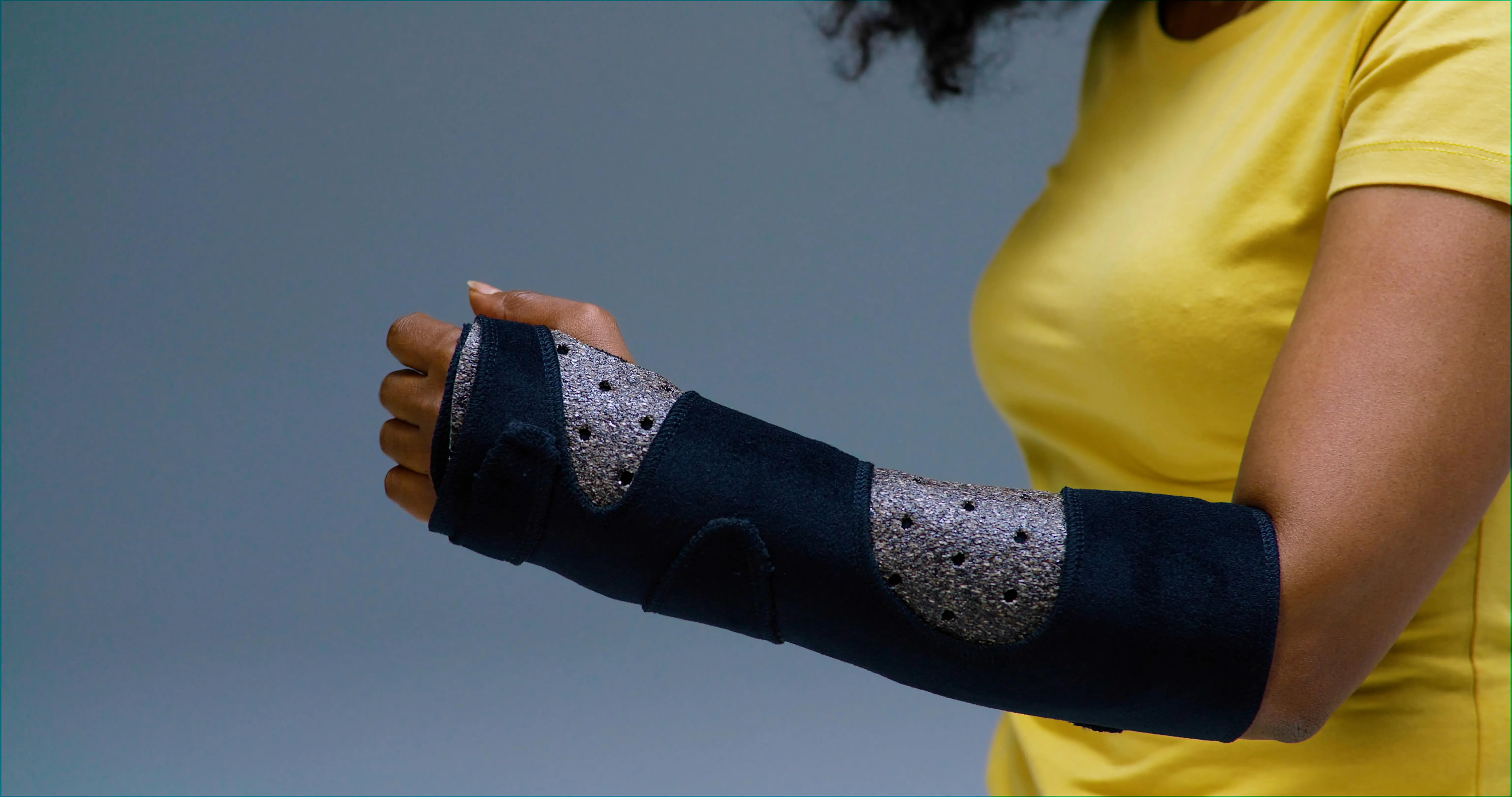
A Modern Casting Solution

Casting and splinting has been stuck with the same messy, toxic, wasteful solutions for fracture care for half a century.

Changing from fiberglass to synthetic fibers doesn't remove the toxic chemicals used in the resin.

Quieter cast saws are still scary, and built-in vacuums don't capture all the dust.

Isn't it time we had a better option?

  • Ditch the gloves

    Dassiet materials are non-toxic and safe to use without gloves or a mask.

  • Start your timer

    Dassiet solutions take 60% less time to apply (on average, based on real user studies).

  • Save the planet

    Our Woodcast material is fully biodegradable (even at home) and our textiles are recyclable in most places.*

*Please check with your local waste services before recycling. :)

Easy as 1, 2, 3

The application process for Dassiet products couldn't be easier - just 5 minutes to your first cast or splint.
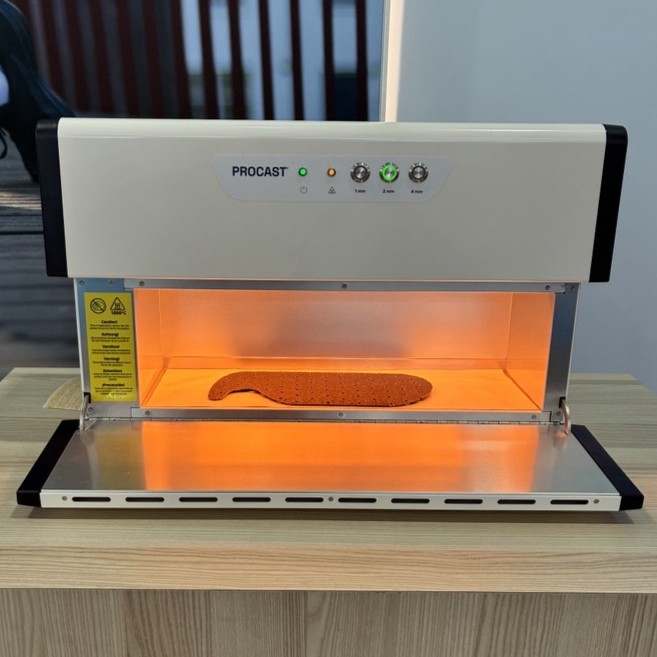
Heat

Use a Dassiet Procast heater to warm the Woodcast material until soft.

Learn more

Wrap

Cut to size and shape, wrap around the patient, and allow to cool (2-5 minutes).

Learn more

Strap

Add any edge finishing and straps and apply to patient. Done!

Learn more

How is Dassiet different?

Let's compare fiberglass and Dassiet head-to-head.

Fiberglass

Dassiet

Safety
close
Full of harmful, toxic chemicals
check
Non-toxic and non-allergenic
close
Requires a mask and gloves to handle
check
No PPE needed - handle with bare hands
Simplicity
close
Long, tedious application process
check
Most applications take ~5 minutes
close
Lots of prep and clean-up for each cast
check
No water, no mess, no clean-up
close
Needs loud cast saw to remove
check
Cuts off with a simple pair of scissors
Sustainability
close
Made from non-renewable materials
check
Biodegrable wood-base polymer
close
Remaining material is wasted
check
Leftover material can be used next time
close
Contaminates water used for application
check
No water needed for application

Trusted by clinicians, supported by research.

Don't just take our word for it. Read the research below. ↓
Comparison of plaster-of-Paris casts and Woodcast splints for immobilization of the limb during serial manipulation and casting for idiopathic clubfoot in infants
Kumar Amerender Singh, Hitesh Shah, Benjamin Joseph
Bone Joint J 2020 Oct; 102-B(10)
Read the Study ↗
An exploratory randomized controlled trial comparing wood-composite and synthetic fibreglass splint systems for the immobilization of paediatric upper limb fractures
Illya Martynov, Thomas Klink, Volker Slowik, Rainer Stich, Peter Zimmermann, Christoph Engel, Martin Lacher, Roland Boehm
Bone Joint J 2020 Oct; 102-B(10)
Read the Study ↗
Comparative study of the strength characteristics of a novel wood-plastic composite and commonly used synthetic casting materials
Panagiotis E. Chatzistergos, Evangelia Ganniari-Papageorgiou, Nachiappan Chockalingam
Clinical Biomechanics Volume 77, July 2020, 105064
Read the Study ↗

Ready to switch?

Schedule a demo to see the difference for yourself.

Schedule a demo